Minimum order value ₹99.00 · Get 10% Off on Cart Value use Coupon code VASP10 · Free shipping over ₹999.00


High Power Audio Transistors: How to Choose the Right Device for Your Amplifier

High-power BJTs such as 2SC5200, 2SA1943, NJW0281, NJW0302, MJ2119x, and MJE150xx are not interchangeable simply because they have similar power ratings. Voltage rating, current capability, SOA, transition frequency, package, and thermal characteristics all affect their suitability for an amplifier design.
Overview
High power bipolar junction transistors (BJTs) are used in circuits that require large current flow, high voltage tolerance, and significant power dissipation. They form the core of many audio amplifier output stages, linear regulators, motor drivers, and industrial control systems.
Although many power devices appear similar at first glance, their electrical characteristics vary significantly. Parameters such as collector voltage rating, current capability, gain behavior, transition frequency, and package type determine how suitable a transistor is for specific applications.
The devices reviewed here represent several generations of power transistor design — from classic TO-3 metal can devices used in vintage amplifiers to modern high-speed audio output transistors designed for high-fidelity systems.
Device Categories in Practical Designs
Driver Transistors
Driver transistors operate between the voltage amplification stage and the output stage of a power amplifier. Their role is to provide sufficient current gain and switching speed to drive the larger output devices.
Examples include the MJE15028/29/30/31 and MJE15034/35 series. These devices provide relatively high transition frequencies and stable gain characteristics at moderate current levels. Because of this, they are commonly used in high-fidelity amplifier driver stages where speed and linearity are important.
Medium Power Output Devices
Transistors such as TIP41C, TIP42C, TIP3055, TIP2955, TIP35C, and TIP36C represent general-purpose power devices that can serve either as driver devices or as output transistors in lower-power amplifiers.
These devices are widely used in hobbyist amplifier designs and power supply regulators because they are inexpensive, easy to source, and relatively tolerant of thermal stress.
High Power Audio Output Transistors
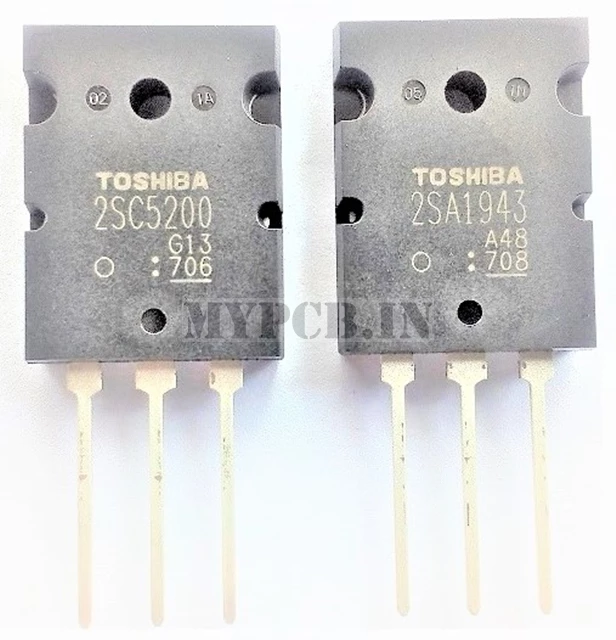
Modern audio amplifiers frequently use complementary transistor pairs designed specifically for linear audio operation. Examples include the well-known 2SC5200 / 2SA1943 pair and the NJW0281 / NJW0302 devices.
These transistors provide higher voltage ratings, large safe operating areas, and better gain linearity at high collector currents. This makes them suitable for high-power stereo amplifiers and professional audio equipment.
Classic TO-3 Power Devices
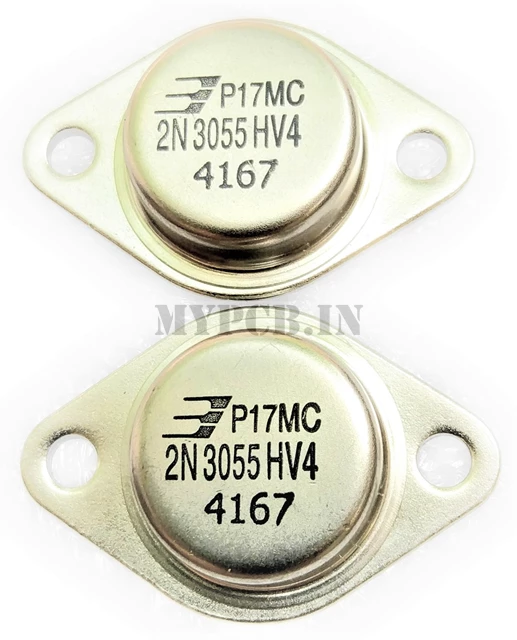
Devices such as the 2N3055, 2N3773, MJ15022, and MJ2119x families represent older but extremely robust transistor designs. They are packaged in metal TO-3 cases that provide excellent thermal conductivity.
Although these devices generally operate at lower frequencies than modern audio transistors, they remain popular in linear power supplies and industrial equipment where reliability is more important than speed.
High Power Transistor Comparison
| Device | Type | Package | VCEO | Collector Current | Power Dissipation | Transition Frequency |
|---|---|---|---|---|---|---|
| TIP41C | NPN | TO-220 | 100 V | 6 A | 65 W | ~3 MHz |
| TIP42C | PNP | TO-220 | 100 V | 6 A | 65 W | ~3 MHz |
| D44H | NPN | TO-220 | 80 V | 10 A | 80 W | ~4 MHz |
| D45H | PNP | TO-220 | 80 V | 10 A | 80 W | ~4 MHz |
| MJE15028 | NPN | TO-220 | 120 V | 8 A | 50 W | 30 MHz |
| MJE15029 | PNP | TO-220 | 120 V | 8 A | 50 W | 30 MHz |
| MJE15030 | NPN | TO-220 | 150 V | 8 A | 50 W | 30 MHz |
| MJE15031 | PNP | TO-220 | 150 V | 8 A | 50 W | 30 MHz |
| MJE15034 | NPN | TO-220 | 350 V | 4 A | 50 W | 30 MHz |
| MJE15035 | PNP | TO-220 | 350 V | 4 A | 50 W | 30 MHz |
| TIP3055 | NPN | TO-247 | 60 V | 15 A | 90 W | 2.5 MHz |
| TIP2955 | PNP | TO-247 | 60 V | 15 A | 90 W | 2.5 MHz |
| TIP35C | NPN | TO-247 | 100 V | 25 A | 125 W | 3 MHz |
| TIP36C | PNP | TO-247 | 100 V | 25 A | 125 W | 3 MHz |
| 2SC5200 | NPN | TO-3P | 230 V | 15 A | 150 W | 30 MHz |
| 2SA1943 | PNP | TO-3P | 230 V | 15 A | 150 W | 30 MHz |
| 2N3055 | NPN | TO-3 | 60 V | 15 A | 115 W | 2-3 MHz |
| 2N3773 | NPN | TO-3 | 140 V | 16 A | 150 W | 4 MHz |
| MJ15022 | NPN | TO-3 | 200 V | 16 A | 250 W | 4 MHz |
| MJ15023 | PNP | TO-3 | 200 V | 16 A | 250 W | 4 MHz |
| MJ21193 | PNP | TO-3 | 250 V | 16 A | 250 W | 4 MHz |
| MJ21194 | NPN | TO-3 | 250 V | 16 A | 250 W | 4 MHz |
| MJ21195 | PNP | TO-3 | 250 V | 16 A | 250 W | 4 MHz |
| MJ21196 | NPN | TO-3 | 250 V | 16 A | 250 W | 4 MHz |
| NJW0281 | NPN | TO-3P | 250 V | 15 A | 150 W | 30 MHz |
| NJW0302 | PNP | TO-3P | 250 V | 15 A | 150 W | 30 MHz |
How to Select the Right Power Transistor
Choosing the correct power transistor depends on several practical electrical and thermal parameters rather than simply selecting the highest rated device.
- Voltage rating: The collector-emitter voltage must exceed the maximum voltage that can appear across the transistor in the circuit, including transient conditions.
- Current capability: The collector current rating must safely handle the peak current expected in the load.
- Safe operating area (SOA): The SOA defines the safe combinations of voltage and current where the transistor can operate without damage.
- Transition frequency: Faster transistors are required in high-bandwidth circuits such as audio driver stages.
- Thermal resistance: Lower thermal resistance improves heat transfer and increases reliability in high-power applications.
Practical Observations
- Driver transistors such as the MJE15028 and MJE15030 series provide significantly higher transition frequencies than older devices.
- Classic devices such as the 2N3055 remain widely used because of their mechanical robustness and availability.
- Modern complementary pairs such as 2SC5200/2SA1943 and NJW0281/NJW0302 are optimized for audio output stages.
- Metal-can TO-3 devices such as the MJ2119x family remain popular in professional amplifiers because of their excellent thermal performance.
Thermal and Mounting Considerations
- All high power BJTs require adequate heatsinking.
- Thermal compound should be used between the transistor case and the heatsink.
- Power dissipation ratings assume proper case temperature control.
- When the transistor case is electrically connected to the collector, insulating pads must be used to prevent short circuits.
FAQ
Which transistor is best for audio amplifier output stages?
Modern high-power audio amplifiers commonly use complementary transistor pairs such as 2SC5200 and 2SA1943 or NJW0281 and NJW0302. These devices provide high collector voltage ratings, large safe operating areas, and good gain linearity, which are important for high-fidelity audio reproduction.
What is the difference between 2SC5200 and MJ21194 transistors?
Both transistors are designed for high-power audio output stages. The 2SC5200 is a modern TO-3P plastic package device widely used in many commercial amplifiers, while the MJ21194 is a TO-3 metal-can transistor known for excellent thermal performance and robustness in professional audio equipment.
Can TIP41C and TIP42C be used in audio amplifiers?
Yes. TIP41C and TIP42C are commonly used in small to medium-power audio amplifiers or as driver transistors for larger output devices. However, they are generally not suitable for very high-power amplifier output stages.
Is the 2N3055 still used in modern electronics?
The 2N3055 remains widely used in power supplies, regulators, and educational amplifier circuits because of its durability and availability. However, many modern audio amplifiers prefer newer transistor pairs with higher voltage ratings and improved linearity.
Why do power transistors require large heatsinks?
Power transistors dissipate significant heat when handling high currents and voltages. Heatsinks transfer this heat away from the transistor junction, preventing excessive temperature rise and improving device reliability.
What does the transition frequency of a transistor indicate?
The transition frequency (fT) represents the frequency at which the transistor’s current gain becomes unity. Higher transition frequencies generally indicate faster devices that are better suited for high-bandwidth circuits such as audio driver stages.
What is a complementary transistor pair?
A complementary pair consists of one NPN transistor and one PNP transistor with similar electrical characteristics. In push-pull amplifier stages, these transistors alternately conduct during positive and negative halves of the signal, improving efficiency and reducing distortion.
| Device | Type | Package | VCEO | Collector Current | Power Dissipation | Transition Frequency |
|---|---|---|---|---|---|---|
| TIP41C | NPN | TO-220 | 100 V | 6 A | 65 W | ~3 MHz |
| TIP42C | PNP | TO-220 | 100 V | 6 A | 65 W | ~3 MHz |
| D44H | NPN | TO-220 | 80 V | 10 A | 80 W | ~4 MHz |
| D45H | PNP | TO-220 | 80 V | 10 A | 80 W | ~4 MHz |
| MJE15028 | NPN | TO-220 | 120 V | 8 A | 50 W | 30 MHz |
| MJE15029 | PNP | TO-220 | 120 V | 8 A | 50 W | 30 MHz |
| MJE15030 | NPN | TO-220 | 150 V | 8 A | 50 W | 30 MHz |
| MJE15031 | PNP | TO-220 | 150 V | 8 A | 50 W | 30 MHz |
| MJE15034 | NPN | TO-220 | 350 V | 4 A | 50 W | 30 MHz |
| MJE15035 | PNP | TO-220 | 350 V | 4 A | 50 W | 30 MHz |
| TIP3055 | NPN | TO-247 | 60 V | 15 A | 90 W | 2.5 MHz |
| TIP2955 | PNP | TO-247 | 60 V | 15 A | 90 W | 2.5 MHz |
| TIP35C | NPN | TO-247 | 100 V | 25 A | 125 W | 3 MHz |
| TIP36C | PNP | TO-247 | 100 V | 25 A | 125 W | 3 MHz |
| 2SC5200 | NPN | TO-3P | 230 V | 15 A | 150 W | 30 MHz |
| 2SA1943 | PNP | TO-3P | 230 V | 15 A | 150 W | 30 MHz |
| 2N3055 | NPN | TO-3 | 60 V | 15 A | 115 W | 2–3 MHz |
| 2N3773 | NPN | TO-3 | 140 V | 16 A | 150 W | 4 MHz |
| MJ15022 | NPN | TO-3 | 200 V | 16 A | 250 W | 4 MHz |
| MJ15023 | PNP | TO-3 | 200 V | 16 A | 250 W | 4 MHz |
| MJ21193 | PNP | TO-3 | 250 V | 16 A | 250 W | 4 MHz |
| MJ21194 | NPN | TO-3 | 250 V | 16 A | 250 W | 4 MHz |
| MJ21195 | PNP | TO-3 | 250 V | 16 A | 250 W | 4 MHz |
| MJ21196 | NPN | TO-3 | 250 V | 16 A | 250 W | 4 MHz |
| NJW0281 | NPN | TO-3P | 250 V | 15 A | 150 W | 30 MHz |
| NJW0302 | PNP | TO-3P | 250 V | 15 A | 150 W | 30 MHz |
| Device | Type | Package | VCEO | Collector Current | Power Dissipation | Transition Frequency |
|---|---|---|---|---|---|---|
| TIP41C | NPN | TO-220 | 100 V | 6 A | 65 W | ~3 MHz |
| TIP42C | PNP | TO-220 | 100 V | 6 A | 65 W | ~3 MHz |
| D44H | NPN | TO-220 | 80 V | 10 A | 80 W | ~4 MHz |
| D45H | PNP | TO-220 | 80 V | 10 A | 80 W | ~4 MHz |
| MJE15028 | NPN | TO-220 | 120 V | 8 A | 50 W | 30 MHz |
| MJE15029 | PNP | TO-220 | 120 V | 8 A | 50 W | 30 MHz |
| MJE15030 | NPN | TO-220 | 150 V | 8 A | 50 W | 30 MHz |
| MJE15031 | PNP | TO-220 | 150 V | 8 A | 50 W | 30 MHz |
| MJE15034 | NPN | TO-220 | 350 V | 4 A | 50 W | 30 MHz |
| MJE15035 | PNP | TO-220 | 350 V | 4 A | 50 W | 30 MHz |
| TIP3055 | NPN | TO-247 | 60 V | 15 A | 90 W | 2.5 MHz |
| TIP2955 | PNP | TO-247 | 60 V | 15 A | 90 W | 2.5 MHz |
| TIP35C | NPN | TO-247 | 100 V | 25 A | 125 W | 3 MHz |
| TIP36C | PNP | TO-247 | 100 V | 25 A | 125 W | 3 MHz |
| 2SC5200 | NPN | TO-3P | 230 V | 15 A | 150 W | 30 MHz |
| 2SA1943 | PNP | TO-3P | 230 V | 15 A | 150 W | 30 MHz |
| 2N3055 | NPN | TO-3 | 60 V | 15 A | 115 W | 2–3 MHz |
| 2N3773 | NPN | TO-3 | 140 V | 16 A | 150 W | 4 MHz |
| MJ15022 | NPN | TO-3 | 200 V | 16 A | 250 W | 4 MHz |
| MJ15023 | PNP | TO-3 | 200 V | 16 A | 250 W | 4 MHz |
| MJ21193 | PNP | TO-3 | 250 V | 16 A | 250 W | 4 MHz |
| MJ21194 | NPN | TO-3 | 250 V | 16 A | 250 W | 4 MHz |
| MJ21195 | PNP | TO-3 | 250 V | 16 A | 250 W | 4 MHz |
| MJ21196 | NPN | TO-3 | 250 V | 16 A | 250 W | 4 MHz |
| NJW0281 | NPN | TO-3P | 250 V | 15 A | 150 W | 30 MHz |
| NJW0302 | PNP | TO-3P | 250 V | 15 A | 150 W | 30 MHz |
| Device | Type | Package | VCEO | Collector Current | Power Dissipation | Transition Frequency |
|---|---|---|---|---|---|---|
| TIP41C | NPN | TO-220 | 100 V | 6 A | 65 W | ~3 MHz |
| TIP42C | PNP | TO-220 | 100 V | 6 A | 65 W | ~3 MHz |
| D44H | NPN | TO-220 | 80 V | 10 A | 80 W | ~4 MHz |
| D45H | PNP | TO-220 | 80 V | 10 A | 80 W | ~4 MHz |
| MJE15028 | NPN | TO-220 | 120 V | 8 A | 50 W | 30 MHz |
| MJE15029 | PNP | TO-220 | 120 V | 8 A | 50 W | 30 MHz |
| MJE15030 | NPN | TO-220 | 150 V | 8 A | 50 W | 30 MHz |
| MJE15031 | PNP | TO-220 | 150 V | 8 A | 50 W | 30 MHz |
| MJE15034 | NPN | TO-220 | 350 V | 4 A | 50 W | 30 MHz |
| MJE15035 | PNP | TO-220 | 350 V | 4 A | 50 W | 30 MHz |
| TIP3055 | NPN | TO-247 | 60 V | 15 A | 90 W | 2.5 MHz |
| TIP2955 | PNP | TO-247 | 60 V | 15 A | 90 W | 2.5 MHz |
| TIP35C | NPN | TO-247 | 100 V | 25 A | 125 W | 3 MHz |
| TIP36C | PNP | TO-247 | 100 V | 25 A | 125 W | 3 MHz |
| 2SC5200 | NPN | TO-3P | 230 V | 15 A | 150 W | 30 MHz |
| 2SA1943 | PNP | TO-3P | 230 V | 15 A | 150 W | 30 MHz |
| 2N3055 | NPN | TO-3 | 60 V | 15 A | 115 W | 2–3 MHz |
| 2N3773 | NPN | TO-3 | 140 V | 16 A | 150 W | 4 MHz |
| MJ15022 | NPN | TO-3 | 200 V | 16 A | 250 W | 4 MHz |
| MJ15023 | PNP | TO-3 | 200 V | 16 A | 250 W | 4 MHz |
| MJ21193 | PNP | TO-3 | 250 V | 16 A | 250 W | 4 MHz |
| MJ21194 | NPN | TO-3 | 250 V | 16 A | 250 W | 4 MHz |
| MJ21195 | PNP | TO-3 | 250 V | 16 A | 250 W | 4 MHz |
| MJ21196 | NPN | TO-3 | 250 V | 16 A | 250 W | 4 MHz |
| NJW0281 | NPN | TO-3P | 250 V | 15 A | 150 W | 30 MHz |
| NJW0302 | PNP | TO-3P | 250 V | 15 A | 150 W | 30 MHz |