Minimum order value ₹99.00 · Get 10% Off on Cart Value use Coupon code VASP10 · Free shipping over ₹999.00

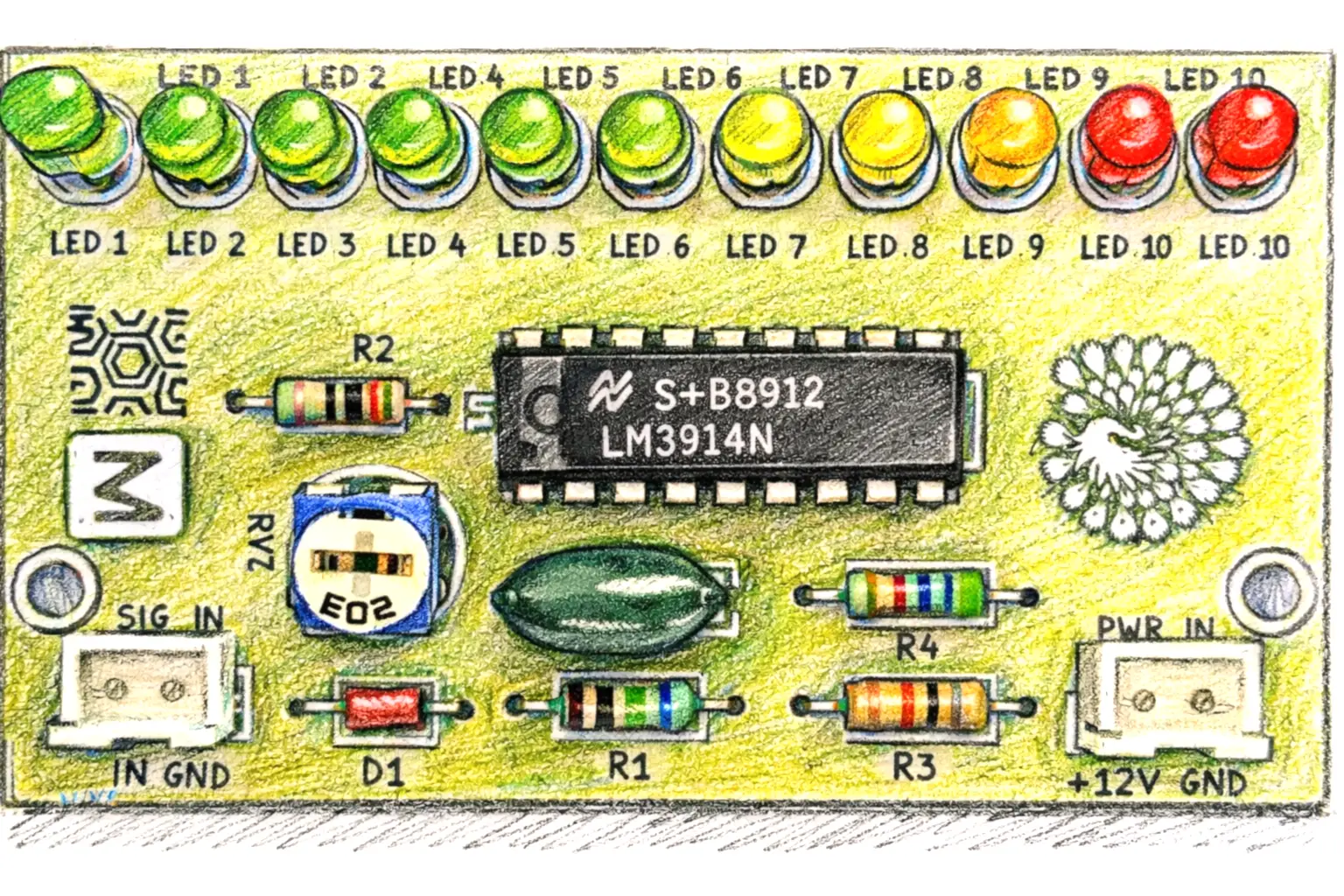
LM3914 / LM3915 10-LED VU Meter Board Review – Speaker Level Audio Indicator

The LM3914 / LM3915 10-LED VU Meter Board is a compact speaker level audio indicator designed for amplifier front panels and DIY audio systems. It converts amplified audio signals into a dynamic LED bar display, allowing real-time monitoring of output level.
If you are building a DIY amplifier project, upgrading a stereo amplifier with VU meter, or adding a speaker output level indicator, this module provides a simple and effective solution.
What Is an LM3914 / LM3915 VU Meter Board?
This board is built around the LM3914 or LM3915 LED driver IC. It monitors the voltage present at the amplifier output and lights up to 10 LEDs according to signal strength.
As the audio signal increases:
- More LEDs illuminate progressively
- Signal peaks become visually noticeable
- Clipping risk is easier to detect
It functions as a 10-segment LED audio level meter and is commonly used in:
- Home audio amplifiers
- DIY power amplifier builds
- Speaker monitoring systems
- Audio testing setups
LM3914 vs LM3915 – Which Is Better for Audio?
LM3914 (Linear Scaling)
- Equal voltage step per LED
- Suitable for DC level monitoring
- Can be used as a general voltage bar graph display
LM3915 (Logarithmic Scaling)
- Logarithmic step progression (approx. 3 dB per step)
- Better matches human hearing response
- Preferred for music and amplifier VU meter applications
For most audio amplifier VU meter installations, LM3915 is generally preferred.
Key Features
| Feature | Description |
|---|---|
| Driver IC | LM3914 or LM3915 |
| LED Display | 10-segment bar graph |
| Modes | Dot mode / Bar mode |
| Signal Type | Speaker output level signal |
| Adjustment | Onboard sensitivity preset |
| Channel Type | Mono (single channel) |
Installation Guide – Speaker Output Connection
This speaker output VU meter board is designed to connect directly to the amplifier speaker terminals.
Wiring method:
- Connect VU meter input to Speaker +
- Connect VU meter ground to Speaker –
The board connects in parallel with the speaker and monitors the amplified audio signal.
Important Installation Notes
- Turn OFF amplifier power before wiring
- Ensure correct polarity
- Avoid short-circuiting speaker terminals
- Adjust sensitivity after installation
Calibration Steps
- Power ON the amplifier.
- Play music at your typical maximum listening level.
- Adjust the onboard preset so the top LED lights at your intended peak output.
Proper calibration ensures the LED audio level display reflects actual listening conditions.
Mono Channel Design – Stereo Requires Two Boards
This is a mono channel VU meter board.
It monitors only one amplifier channel.
If you are building a stereo amplifier with LED VU meter, you will need:
- One board for the Left channel
- One board for the Right channel
Each board connects independently to its respective speaker output terminals.
Do not combine left and right outputs into a single board.
Dot Mode vs Bar Mode
Dot Mode
- One LED active at a time
- Lower current consumption
Bar Mode
- All LEDs up to current level remain ON
- Classic amplifier VU meter appearance
- Better visibility on front panels
Bar mode is commonly preferred for DIY amplifier front panel VU meter installations.
Who Should Use This Board?
- DIY audio hobbyists
- Power amplifier builders
- Electronics students
- Repair technicians upgrading audio systems
Frequently Asked Questions
Can this VU meter connect directly to speaker output?
Yes. This board is designed for direct speaker output connection.
Is LM3915 better than LM3914 for music?
Yes. LM3915 uses logarithmic scaling, which better matches audio perception.
How many boards are needed for stereo?
Two boards are required — one per channel.
Is calibration required?
Yes. Sensitivity adjustment is recommended after installation.
Final Review Summary
The LM3914 / LM3915 10-LED VU Meter Board is a practical speaker level LED indicator for amplifier projects.
For stereo amplifier builds, use two boards. For music systems, the LM3915 variant is typically the better option.


